



High School Counsellors POV: What Student Well-Being and Resilience Really Looks Like

Dark days and cold weather aren’t exactly serotonin boosters, which is why it’s more important than ever to check in on yourself and those you care about during this season.
Students today, especially those in high school, have a lot to deal with, whether it’s the stress of a difficult class, friendship challenges, first relationships (and break-ups), navigating the online world and social media, or things happening at home. Often, it’s teachers and counsellors who notice first. They’re the ones who see when a student’s smile fades, or when attendance patterns shift, or when something just seems off. With their expertise and deep compassion, counsellors are able to reach out with care and help students navigate whatever they’re going through.
Read up on what Andrea Massullo (right) and Elaine Maxwell (left), two high school counsellors at Brooks Secondary, have to say about resiliency, mental health, how families and schools can work together to create a stronger sense of belonging, and more!
What does resiliency mean for students today?
Resiliency is really how students bounce back when life throws them challenges... In students today, resiliency looks like being able to pause, take a breath, and try again instead of giving up. It is showing up even when they do not feel like it. It is learning to say, ‘Okay, that didn’t go the way I wanted, but what can I do differently next time?’ rather than “I’m just bad at this.” Resilience can be seen in someone who asks for help when things get tough, or in a student who keeps trying to improve bit by bit instead of expecting perfection. This is often referred to as having a growth mindset versus a fixed mindset.
How do counsellors help students build resilience?
School counsellors play an important role in helping students build resiliency skills by teaching useful tools and providing a safe space to talk things out. We help students identify strengths, manage stress, and find ways to problem-solve rather than shut down. Sometimes that means helping a student set goals, teaching coping strategies, or simply listening. We also remind students that mistakes and setbacks are not failures, they are part of learning who they are and how they handle the world.
Can resilience be learned?
Resiliency can absolutely be learned, but it often grows through experience. People do not wake up one day suddenly resilient, as it is something that builds over time and often through experiences that present as difficult. Every time a student faces something hard and gets through it, even if it is messy, they become a little stronger and more confident in themselves. Counsellors, teachers, parents, and friends can help students notice those moments and learn from them, so that next time life feels overwhelming, they will have a few more tools and an increased belief in themselves to keep going.
Why do some students struggle with regular attendance?
There are many different reasons why students might struggle with regular attendance, and it is not always as simple as not wanting to come to school. Sometimes it is things like anxiety, depression, or feeling overwhelmed by the social or academic pressures that come with being at school all day. For some students, mornings can feel like the hardest part of the day. Getting out of bed, getting ready, and facing a big crowd of people can be exhausting. Other times, it might be things happening at home, such as family stress, unreliable transportation, or feeling unsafe or uncomfortable in certain school environments. Every situation is unique, and that is why we try to really understand what is underneath the struggle instead of just focusing on the absences themselves.
How do counsellors approach attendance concerns with care?
When attendance becomes a concern, we, along with teachers, know that it is a sensitive topic, and we approach those conversations with care and respect. The goal is not to shame or blame, but to listen first and figure out what is really going on. We might start by checking in privately with the student to hear their side and see what kind of support might help. When talking with families, we keep the focus on working together as a team and avoiding blame. The goal is to find a solution that makes the school experience feel more manageable. Sometimes that means adjusting schedules, offering mental health support, or connecting students and families with extra resources to make daily routines easier.
Is there a connection between attendance and mental health?
Definitely! When students are struggling with their mental health, school can feel overwhelming, which can make attendance harder. At the same time, being connected to school, whether it be through friends, teachers, or supportive adults, can help improve mental health. It is a bit of a cycle: feeling better helps students attend more, and attending more can help them feel more connected and supported. As counsellors, we work to break that cycle in a positive way by helping students find balance, build coping strategies, and make school a place where they feel safe, accepted, and ready to take on the day one step at a time.
How has technology changed students’ mental health needs?
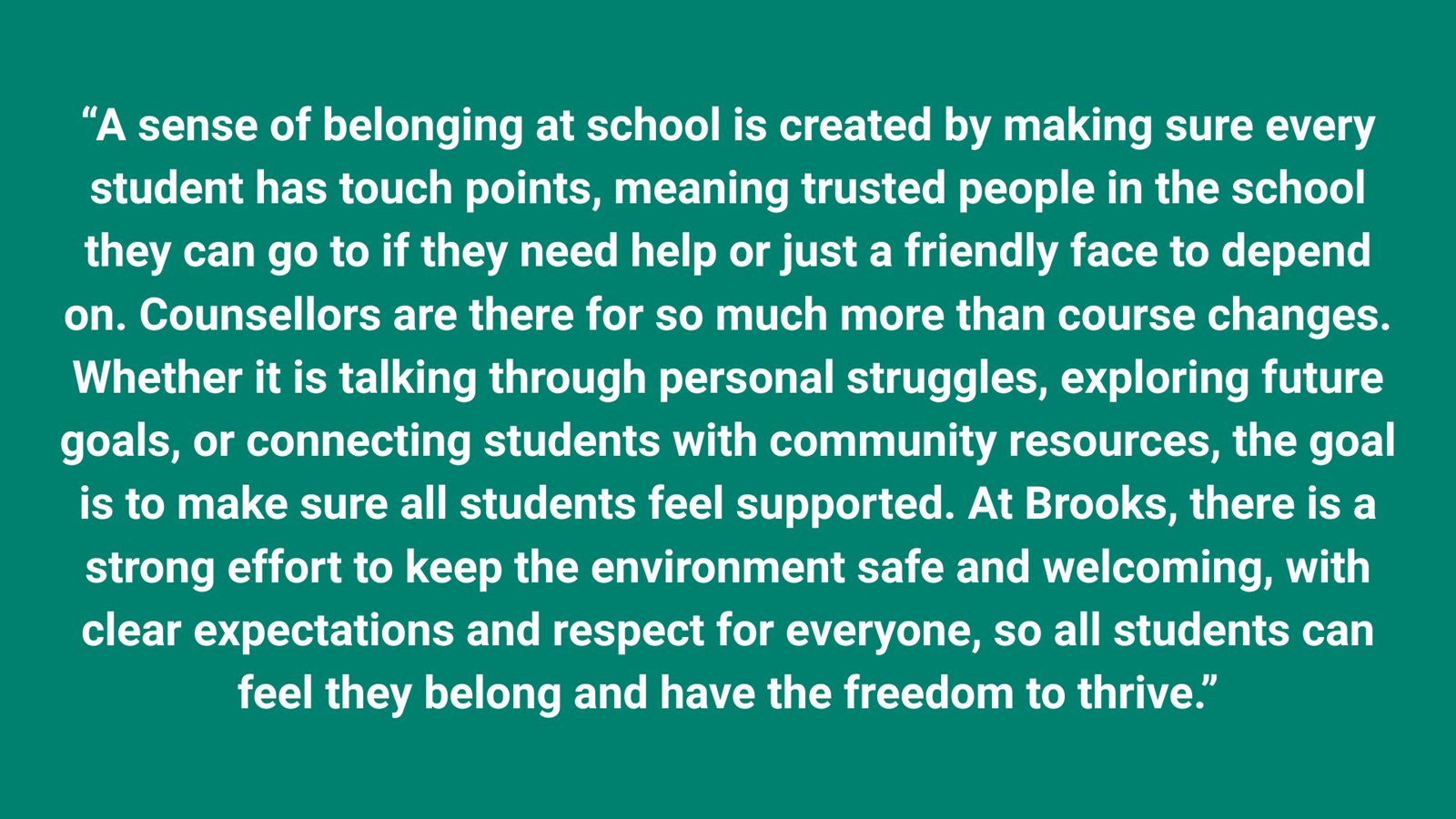
Over the past few years, there has been a big shift in students’ mental health needs, and a lot of it connects to the rise of technology and social media. On one hand, being online helps students stay connected and find communities that understand them. But on the other hand, it has created more pressure, with constant comparisons, worrying about what people post, and never really getting a break from it all. Many students are also feeling more anxious or burnt out due to the fast pace of daily lives. We have had to adapt our strategies to meet these new realities. This means having more open conversations about screen time, social media boundaries, internet safety, and self-care, and helping students find balance between the online world and real-life connections. There is now a stronger focus on teaching coping skills, setting healthy routines, and helping students find confidence in who they are, not just how they appear online.
How can families and schools work together to support resilience?
Families and schools can create an even stronger sense of belonging when they work together. It starts with communication, including sharing concerns, celebrating progress, and showing that everyone is on the same team. When families encourage their teens to reach out, get involved, and talk about what is going on, it helps build trust. When schools create spaces where every student feels seen and valued, it reinforces that sense of connection from both sides.
Need support? Check out these counsellor recommended resources:
 www.anxietycanada.com or download the free Mindshift CBT app - available on Google Play & the App Store.